STORY AT-A-GLANCE
- Changes in how your cat uses the litter box may be their only way to tell you something’s wrong, especially with urinary health
- Feline lower urinary tract disease (FLUTD) is not one illness but a group of issues like bladder inflammation, stones, infections, and blockages, all with similar symptoms
- Male cats, overweight cats, cats on dry food diets, indoor-only cats, and those in high-stress or multi-cat homes face a higher risk of urinary problems
- Straining to urinate, blood in the urine, or urinating outside the litter box are warning signs. In males, a blocked urethra is a life-threatening emergency
- Hydration, stress reduction, a clean litter box setup, and veterinary-recommended diets are key to keeping your cat healthy and comfortable long-term
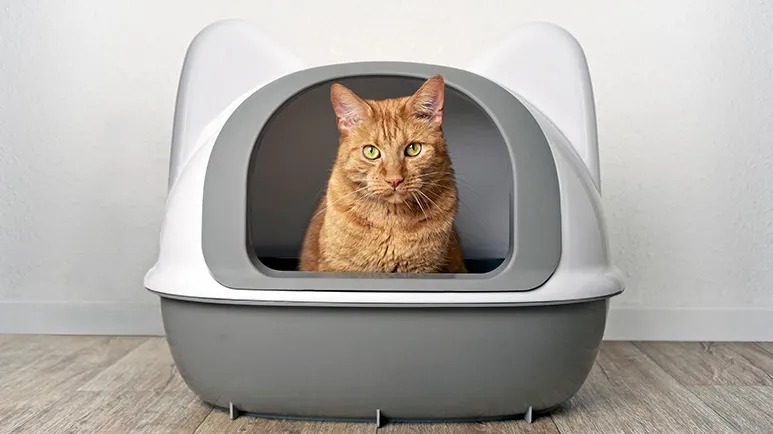
As a cat parent, you have probably seen your furry companion use the litter box dozens, if not hundreds, of times. It may seem like a routine part of your cat’s day, but did you know that your cat’s litter box habits can give you vital clues about their health?
One of the most important messages your cat may be trying to send is about their urinary health. Lower urinary tract disease is far more common in cats than most people realize, and it can be painful, distressing, or even life-threatening if left untreated. Fortunately, learning what to look for and how to respond can help you keep your feline friend happy, healthy, and out of danger.
What Is Feline Lower Urinary Tract Disease (FLUTD)?
Feline lower urinary tract disease (FLUTD) is not just one condition — it is an umbrella term that covers several different problems affecting your cat’s bladder and urethra (the tube that carries urine from the bladder out of the body).1,2 FLUTD includes:
- Idiopathic cystitis (inflammation of the bladder without a known cause; commonly referred to as FIC)
- Bladder stones
- Urinary blockages
- Urinary tract infections (UTIs)
- Anatomical abnormalities
- Even urinary tract cancer (though rare)
Each of these issues can show up with similar signs, so it is not always easy to tell what is going on just by looking. That is why understanding the symptoms is the first step in helping your cat.
Is It Just a Litter Box Mishap — or a Red Flag?
Your cat cannot tell you with words that something is wrong, but they have their own way of communicating. When it comes to urinary problems, the signs often show up in or around the litter box. Here are the most common symptoms of FLUTD:
- Straining to urinate
- Crying out in pain while urinating
- Urinating in small amounts — or not at all
- Frequent trips to the litter box
- Urinating outside the box – often in a sink or bathtub, or in piles of clothing or towels
- Blood in the urine (it may look pink or red)
- Licking the genital area excessively
- Acting withdrawn, moody, or irritable
- Loss of appetite or lethargy
Some cats even overgroom their belly or genitals until they lose hair. In male cats especially, if they are straining to urinate but nothing comes out, it could mean a complete blockage — a medical emergency that can be fatal in as little as 24 to 48 hours.3,4,5
Understanding the Most Common Culprits Behind FLUTD
Let’s break down the main causes of FLUTD and what they mean for your cat. Understanding the root of the problem can help you take the right steps toward treatment and long-term prevention:
- Feline idiopathic cystitis (FIC) — This is the most common cause of FLUTD accounting for approximately 50% of cats with lower urinary tract disease.6 “Idiopathic” means we do not fully understand what causes it, but stress plays a huge role. Just like people can develop ulcers or migraines from stress, cats can develop bladder inflammation.7 Diet may also play a significant role. Cats that are eating non-prescription kibble (dry food) are significantly more likely to experience signs associated with FIC due to the dehydrating effect of the food and the weight gain generally associated with kibble diets. A species appropriate wet food diet can be helpful for prevention.
FIC is most common in cats under 10 years old, and is more likely to occur in indoor cats, especially those in multi-cat households. The episodes can be short-lived but often come back. There is no specific test or known cure for FIC, but symptoms can be managed with lifestyle changes and stress reduction. - Bladder stones (Uroliths) — Bladder stones are rock-like formations that develop from crystals in your cat’s urine. These can cause pain, irritation, or even blockages.8,9
Some stones, like struvite, are associated with infection and may dissolve with a special diet and antibiotic therapy, but others, like calcium oxalate stones, usually need to be removed surgically. Your veterinarian may use radiographs (“X-rays”) or ultrasound to detect bladder stones. If the underlying causes are not managed, these stones can come back. - Urethral obstruction — This is one of the most dangerous conditions in cats, especially males, and can be a sequelae to stones and to FIC. Because their urethras are longer and narrower, they are at higher risk of becoming blocked versus their female counterparts. Signs of obstruction include straining with little or no urine output, yowling in pain, lethargy, vomiting, and collapse.
This is a life-threatening emergency. If your cat cannot urinate, toxins build up quickly, leading to kidney failure and death if not treated immediately.10,11 - Urinary tract infections (UTIs) — Although UTIs are more common in dogs and humans, they do happen in cats — especially older females, or those with other health issues like diabetes or kidney disease. UTIs are less common in young, healthy cats. Your veterinarian may recommend urine tests and a bacterial culture and if confirmed, antibiotics are usually prescribed.12,13
FLUTD can also be caused by injury to the urinary tract, birth defects, or tumors or cancer. These are less common, but your veterinarian may need to rule them out if other causes are not clear.
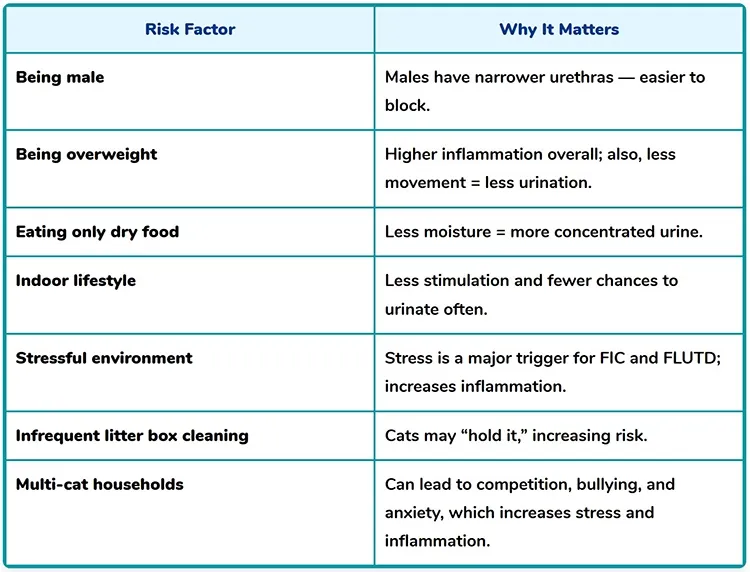
What Puts a Cat at Risk?
Certain lifestyle and health factors can make a cat more likely to develop FLUTD:
When to Call the Veterinarian
If your cat shows any signs of urinary distress, do not wait. Contact your veterinarian as soon as possible. And if your cat is straining to pee with no result, appears in pain, or starts vomiting — get to an emergency clinic right away.
Even if the symptoms seem mild, it is still important to have your cat checked. What looks like a behavioral problem might actually be a medical issue.
How Veterinarians Diagnose FLUTD
Since FLUTD is not just one disease, your veterinarian will need to run tests to find out what is really going on. Here is what they may recommend:
- Physical exam and detailed history (your observations at home matter!)
- Urine sample to check for blood, crystals, bacteria, or pH changes via urinalysis and urine culture
- Radiographs (X-rays) or ultrasound to look for stones or blockages
- Blood tests to assess kidney function and overall health
- Biopsy (in rare cases, to check for tumors)
Sometimes, even with all these tests, no specific cause is found. That is common with idiopathic cystitis, and your veterinarian may focus on symptom relief and preventing future episodes.14,15
Treatment Options — What You Can Expect
Treating FLUTD is not one-size-fits-all — it depends entirely on what is causing the issue in your cat. Depending on the cause of your cat’s symptoms, treatment may include:
- Special urinary diets or homecooked style diets — These help dissolve certain stones or prevent crystals, and generally have a lower carbohydrate content and higher water content
- Increased water intake — Wet food, fountains, or flavor-enhanced water
- Pain relievers and anti-inflammatories — Provides comfort during flare-ups
- Antibiotics (if an infection is confirmed)
- Surgery — This may be needed to remove bladder stones or widen the urethra in recurring blockages
- Catheters and IV fluids — Needed for emergency treatment of obstructions to flush backed up toxins from the blood
Stress and Your Cat’s Bladder — The Hidden Link
You might be surprised to learn how much stress impacts your cat’s urinary health. Cats are creatures of habit, and even small changes, like moving furniture, adding a new pet, or inconsistent schedules, can trigger a flare-up. To reduce stress for your cat, make sure to:
- Stick to routines
- Avoid loud noises and sudden changes
- Provide cozy hiding spots
- Use pheromone diffusers (like Feliway)
- Give them “ownership” of spaces — vertical perches, scratching posts
- Avoid overcrowding in multi-cat homes
- Use multiple litter boxes; the rule of thumb is 1 litter box per cat plus 1
- Do not punish for accidents — this increases anxiety
The American Veterinary Medical Foundation (AVMA) also recommends a strategy called Multimodal Environmental Modification (MEMO) to help reduce stress and give cats more control over their space. Think of it like cat-friendly feng shui.16
Your Litter Box Setup Is More Important Than You Think
Your cat’s litter box situation matters more than you might realize. If they do not like the box — or if it is dirty — they may avoid using it altogether. That is when problems start. Remember these tips for a healthy litter box routine:
- Provide one box per cat, plus one extra.
- Scoop at least twice a day.
- Change the litter weekly.
- Place boxes in quiet, accessible locations.
- Try different types of litter if your cat seems picky.
- Use large, uncovered boxes for ease and comfort.
How to Help Your Cat Urinate More Often
Encouraging your cat to urinate regularly helps prevent problems. Here is how to support healthy hydration and bathroom habits:
- Feed wet food as much as possible. It contains up to 80% water.
- Add extra water bowls in multiple rooms.
- Try a cat water fountain; cats love running water.
- Flavor water with tuna juice or low-sodium broth.
- Keep their bowls clean and fresh daily.
Cats who drink more urinate more, which flushes out toxins, crystals, and bacteria before they can become a problem.
Living with a Cat Prone to FLUTD
If your cat has had FLUTD once, there is a good chance they could experience it again. But with the right care, many cats go on to live happy, comfortable lives. Keep these care tips in mind:
- Stick to the veterinarian’s recommended diet.
- Schedule regular checkups.
- Watch for subtle signs of recurrence.
- Make environmental changes slowly and calmly.
- Keep their world predictable and peaceful.
- Consult your integrative veterinarian for additional modalities for inflammation management and stress reduction.
You Know Your Cat Best
At the end of the day, you are your cat’s best advocate. You know their habits, quirks, and personality. If something seems off, trust your instincts.
Pay attention to the signs, especially changes in litter box behavior. And if you notice straining, blood in the urine, or accidents outside the box, take it seriously. Remember, FLUTD can be managed (and often prevented) with a bit of attention, early action, and a lot of love.
Sources and References
- 1,3,8,12,14 International Cat Care, November 28, 2025
- 2,4,9,10,13,15,16 AVMA, Feline lower urinary tract disease (FLUTD)
- 5,7,11 Animal Wellness Magazine, January 20, 2026
- 6 Research Gate, July 2019


