STORY AT-A-GLANCE
- Cats spend about two to five hours a day grooming themselves, which can equal half of their waking hours
- Cats groom to clean their coat, regulate body temperature, soothe itchy skin, manage pain, bond socially, and relieve stress — making licking a normal, necessary behavior that supports both physical and emotional well-being
- Overgrooming occurs when licking becomes excessive or repetitive, damaging the skin, pulling out hair or disrupting daily activities; and is often triggered by issues like allergies, fleas, pain, stress, anxiety, or lingering habits formed over time
- If you notice hair loss, irritated skin, or nonstop licking, visit your veterinarian to rule out medical causes and determine whether treatment or behavioral support may be needed
- Stress‑reducing routines, environmental enrichment, regular play, calm handling, and supportive tools like pheromones can also help your cat ease up on the excessive licking
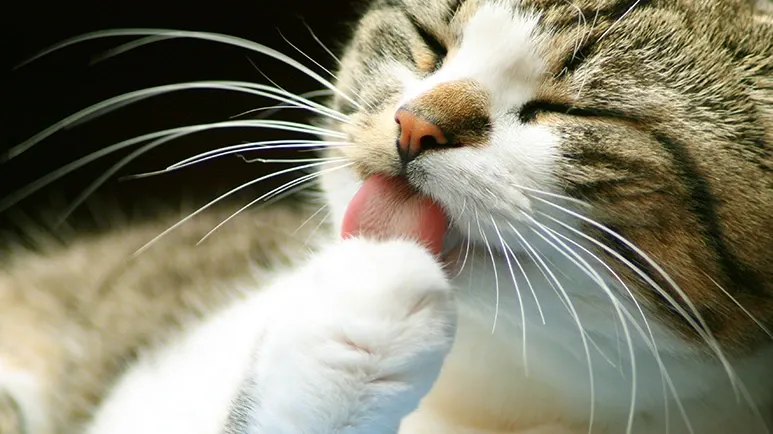
When you think about your own grooming routine, it is probably pretty quick — a shower, brushing your hair, or a few minutes at the sink before heading out. For cats, though, grooming is a whole different story. Your feline friend treats it like a part‑time job.
Cats spend about two to five hours a day licking their fur, which can add up to half of their waking hours. “It’s a huge chunk of their day,” says Pamela Perry, D.V.M., resident in animal behavior at the Cornell University College of Veterinary Medicine and a Camuti Consultant with the Cornell Feline Health Center.1 With that much time devoted to grooming, it’s clear that licking isn’t just about staying tidy — it plays an important role in how cats feel and function each day.
Licking Is Part of a Cat’s Purr-sonal Hygiene
Cats begin grooming themselves as early as four weeks old, and it remains a day‑to‑day part of how they care for their bodies and manage comfort throughout their lives.2,3
One major purpose of your cat’s self grooming is coat care. A cat’s rough tongue helps remove dirt, loose hair, and small parasites, while paw‑licking allows them to clean hard‑to‑reach spots like the face and ears. This process also spreads natural oils from scent glands around the head and chin, keeping the skin and fur healthy.
Grooming does not stop at cleanliness. Licking helps cats regulate their body temperature since cats do not sweat like humans. The steady motion of grooming can also stimulate circulation, particularly in the legs and paws.
Cats may focus grooming on certain areas when something feels off. According to William Miller, Jr., V.M.D., Professor Emeritus at Cornell University’s College of Veterinary Medicine, cats tend to excessively lick areas that are itchy or painful.
Stress plays a role, too since licking can release calming endorphins and help cats cope with changes in their environment. Knowing why cats groom normally makes it easier to recognize when that healthy habit begins to cross into overgrooming.4
When a Healthy Habit Turns Harmful
Overgrooming happens when a cat licks so much that it starts affecting their skin or daily routine. This often begins with a clear trigger — like fleas, allergies, or irritated skin. and even when that problem clears up, some cats keep licking simply because the habit has formed. When cats focus excessively on licking limited areas of the body — such as the belly, inner legs, back, or tail base, problems may develop, such as.5
- Hair loss and skin irritation — Fur may be pulled out , leaving bald patches and red, inflamed areas of skin.
- Secondary infections — Broken skin can allow bacterial or yeast infections to take hold.
- Environmental damage — Exposed skin is more vulnerable to heat, cold, and irritation.
- Digestive issues — Excess fur ingestion can increase hairballs and, in severe cases, lead to constipation or intestinal blockage.
Though exposed skin and bald patches can look alarming, the reassuring news is that overgrooming is often treatable once the underlying cause is identified and addressed.
What You Can Do if Grooming Gets Out of Hand
When your cat is overgrooming, the first step is a visit your veterinarian. Your vet can check for common medical triggers, including allergies, skin infections, and conditions like hyperthyroidism that may be driving the excessive licking.6
The encouraging news is that many of these causes are treatable. Bacterial, fungal, and parasitic skin infections often respond well to the right medications, although some cats may need longer courses of treatment or follow‑up testing to confirm the problem has cleared up.7
If medical issues are ruled out, your veterinarian can then help determine whether the cause is behavioral. Stress or anxiety may be contributing to your cat overgrooming. In these cases, behavior modification, reducing environmental stress and medication or supplements may be recommended to help calm your cat and gradually break the overgrooming cycle.
How to Help Your Kitty Take It Easy on the Licking
If your vet has ruled out medical causes, the focus shifts to helping your cat feel calmer and more secure. By understanding what your pet’s needs and making a few supportive adjustments at home, you can gradually help reduce overgrooming.8
- Watch how your cat moves — Your cat’s body language can tell you a lot before overgrooming starts. Signs like wide eyes, flattened ears, a stiff posture, or pulling away from touch can signal stress or discomfort. Noticing these early cues allows you to step in before licking becomes intense or repetitive.
- Know what gets them licking — Pay attention to what happens before overgrooming starts. Common triggers include visitors, loud noises, changes in routine, or other pets. If a trigger cannot be removed, provide a quiet, safe space your cat can retreat to.
- Downplay the threat of triggers — For unavoidable triggers, slow exposure paired with treats or play can help. This approach trains your cat that stressful situations do not always lead to fear, reducing the urge to self‑soothe through excessive licking.
- Stick to a steady routine — Predictable feeding times, play sessions, and rest periods help cats feel secure. Consistency reduces anxiety caused by uncertainty, which can lower stress‑related grooming.
- Curate an entertaining environment — Offer toys, hiding spots, climbing areas, scratching posts, and puzzle feeders or even cat grass. Mental and physical stimulation helps prevent boredom, a common contributor to compulsive grooming — especially in indoor cats.
- Do not downplay the value of play — Interactive play gives cats a healthy outlet for pent‑up energy and stress. Even short daily sessions can help redirect focus away from grooming and strengthen your bond.
- Avoid punishment — Never punish overgrooming. Correction increases stress and often worsens the behavior. Focus instead on prevention, redirection, and positive reinforcement.
- Try out pheromones or aromatherapy — Some cat parents find that synthetic pheromones help create a calmer environment. These products mimic natural calming signals and may reduce stress when used alongside behavior changes. Cat safe essential oils can also relieve stress. Some safe oils for cats include catnip, lavender, and chamomile. Always make sure to dilute essential oils in carrier oil such as coconut oil before use and only use pure and naturally (not chemically) derived essential oils. Following proper guidance from your holistic vet will ensure they are used safely with your cat.
- Calming supplements — Calming supplements such as those containing ashwagandha or L-theanine can relax your cat and resolve underlying stress or anxiety that may be causing overgrooming. Your holistic vet can also offer custom herbal formulas that may help your cat.
- Acupuncture or acupressure — Some cats may benefit from acupuncture or acupressure to help relieve pain or stress that can cause overgrooming.
Working Together to Help Your Cat Feel Better
Overgrooming can feel overwhelming at first, but with patience and the right support, many cats do find relief. Collaborating closely with your veterinarian and making slight changes to reduce stress at home can go a long way toward helping your cat feel more comfortable. Every cat is different, so give yourself grace as you learn what works best.


