STORY AT-A-GLANCE
- Your cat’s heart rate can offer useful clues about overall health, helping you spot possible stress, pain, illness, or other changes before more obvious symptoms appear
- A normal resting heart rate is much faster in cats than in people, so learning your own cat’s usual range can help you recognize meaningful changes
- Checking your cat’s pulse at home is simple when your cat is calm, and regular checks can give you a helpful baseline for future comparison
- A heart rate that stays too fast, too slow, or feels irregular may signal a problem, especially when paired with weakness, appetite changes, or breathing trouble
- Heart rate is only one piece of the picture, so it is best used alongside breathing, behavior, energy level, and veterinary care to support your cat’s health
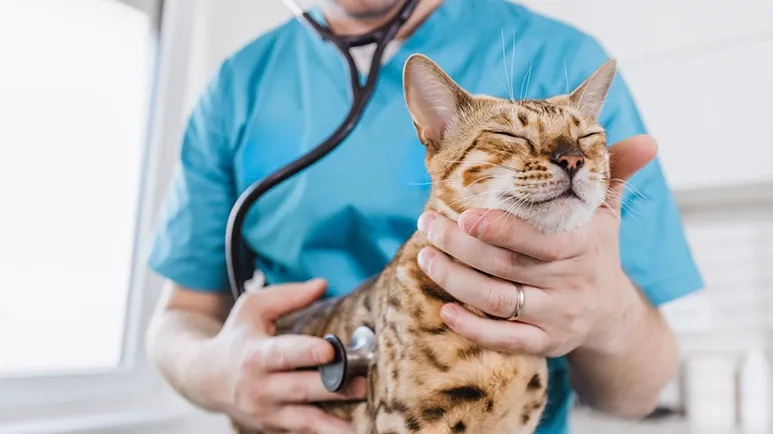
Your cat may look calm and quiet on the outside, but a lot is happening under that furry chest. The heart is working around the clock, sending blood and oxygen where they need to go. That is why your cat’s heart rate can tell you a surprising amount about overall health.
A change in heart rate can be linked to stress, excitement, pain, illness, or a more serious problem. Learning what is normal does not mean you need to become an expert. It simply helps you notice when something seems different, so you can respond sooner instead of later.
Why Heart Rate Matters
Many cat owners do not think about heart rate unless something is clearly wrong. But it can be one of the easiest health checks you can do at home. When you know your cat’s normal resting heart rate, you are better able to spot changes that may matter.
A heart rate that is too fast, too slow, or uneven can be an early sign that your cat is not feeling well. That is especially important because cats often hide signs of illness.1
In other words, heart rate is not just a number. It is one clue in the bigger picture of your cat’s health. On its own, it does not tell you everything. But when you look at it alongside breathing, energy level, appetite, and behavior, it becomes much more useful.
What Is Normal for a Cat?
Cats have much faster heart rates than people do, so a number that sounds high to you may be completely normal for them. According to Animal Wellness Magazine, the heart rate of a healthy adult cat at rest usually falls somewhere around 140 to 220 beats per minute.2 However, pet first-aid guidance gives a range of about 160 to 220 beats per minute.3
Merck Veterinary Manual gives a much lower range of 120-140 beats per minute4 for resting heart rate. This would be the more ideal rate for when your cat is truly relaxed and not stressed at home. Heart rates in a clinic setting do tend to be higher due to stress.
That range can shift for perfectly normal reasons. Kittens often have faster heart rates, while older cats may sit at the lower end of the range. Smaller cats may run a little faster, and larger cats may be a little slower. That is why it helps to know the general normal range, but it is even more helpful to know what is normal for your cat.
Context Matters More Than the Number
Your cat’s heart rate is always changing. It can go up when they are playing, running, startled, excited, or stressed. That means a reading is only useful when you look at the situation around it.
A high number right after a burst of play is very different from a high number while your cat is resting quietly on the couch or sleeping. The most useful reading is a resting heart rate taken when your cat is calm, comfortable, and not reacting to activity or stress.5
This is where many owners get confused. They take a reading right after their cat has been active, then worry that the number seems high. In reality, the heart may simply be responding the way it should. What matters more is whether the rate settles down again once your cat is relaxed.
When Is the Ideal Time to Check Your Cat’s Heart Rate?
The best time to check is during a quiet moment, such as when your cat is napping, resting in a favorite spot, or relaxing after a calm stretch of the day. If your cat has just been playing, running, hiding from a loud sound, or struggling to get away from handling, that is not the best time to check — the reading may not be accurate.
If your cat dislikes being touched, do not force it. A frightened or squirming cat will have a faster heart rate, and the reading will not tell you much. Gentle handling is the goal. A calm setting helps both you and your cat.6
How to Check Heart Rate at Home
You can check your cat’s heart rate in two basic ways: by feeling the heartbeat in the chest or by feeling the pulse on the inside of the thigh. To feel the heartbeat in the chest:7
- Place your hand on the left side of your cat’s chest, just behind the front leg, around the area where the elbow touches the body.
- Once you feel the heartbeat, count the beats for 15 seconds and multiply by 4 to get the number of beats per minute.
You can also feel the pulse by placing your fingers high on the inside of the thigh, where the leg meets the body. Use gentle pressure and wait for the pulse to become clear. Then count for 15 seconds and multiply by 4, or count for a full minute if you want a direct reading.8 In general, cats do not prefer this method and often tolerate a hand on the chest better.
The first few tries may feel awkward, and that is normal. You may lose the spot, miscount, or wonder whether you are feeling the heartbeat at all. One trick to help is to use lighter pressure; often when the pulse is not felt right away, people push harder. It may seem counterintuitive, but try a lighter touch. Most people get better with practice. The goal is not a perfect reading every time, but rather learning what feels normal for your cat.
What a Fast Heart Rate Can Mean
A fast heart rate is not always a sign of trouble; it may simply mean your cat is excited, anxious, or active. But a heart rate that stays high while your cat is resting can be more concerning. A persistently high resting rate above 220 beats per minute may be linked with issues such as heart disease, high blood pressure, or an overactive thyroid.9
A fast resting heart rate becomes even more concerning when it shows up along with other warning signs, especially breathing trouble, weakness, collapse, or heavy panting. A racing heart after a burst of activity is one thing. A racing heart during quiet rest is another.
What a Slow or Irregular Heart Rate Can Mean
A slow heart rate can also be a warning sign, especially if your cat seems weak, unusually tired, or faint. An irregular rhythm matters too. If the heartbeat seems to skip, pause, or feel uneven, that is worth taking seriously.
An odd rhythm does not always mean a heart emergency, but it is not something to ignore. Cats are very good at hiding discomfort, so even subtle changes can matter. A strange heartbeat paired with lower energy, less interest in food, or less willingness to jump and play deserves attention.
Look at Breathing and Body Temperature, Too
Heart rate becomes much more useful when you look at it together with breathing. A normal resting breathing rate for a cat is about 20 to 30 breaths per minute.10
To check it, simply watch your cat’s chest rise and fall while resting. One rise and one fall count as one breath. Count for a full minute. If your cat’s heart rate seems high and breathing is also fast or labored, that is more concerning than a heart-rate change alone. As with heart rate, it helps to monitor your cat’s breaths per minute rate regularly so that you know what the normal baseline for your cat is.
Body temperature can affect heart rate as well. A normal temperature for a cat is about 100.5 to 102.5 degrees Fahrenheit (38.1 to 39.17 degrees Celsius).11,12 A cat who has a fever, is overheated, or is otherwise unwell may not have the same resting pulse you are used to. You do not need to check temperature every time you check heart rate, but it helps to remember that the body’s vital signs work together.
Signs You Should Not Ignore
A home heart-rate check is most helpful when you use it as part of a bigger picture. If your cat has an abnormal pulse along with serious symptoms, contact your veterinarian right away. Watch closely for:13
- Trouble breathing
- Collapse or fainting
- Extreme weakness
- Blue or pale gums
- Sudden severe tiredness
- A heartbeat that seems wildly fast, very slow, or clearly irregular
Not every problem looks dramatic. Sometimes the more important pattern is a change that keeps happening. Your cat may not collapse or show obvious distress, but the resting heart rate may seem faster than usual several days in a row. The heartbeat may feel odd each time you check. Your cat may seem quieter, less interested in food, or less eager to jump and play. That kind of steady pattern is worth discussing with your veterinarian.
Learn Your Cat’s Normal Before There Is a Problem
One of the best things you can do is check your cat’s heart rate when your cat seems perfectly healthy. A few calm readings on different days can give you a personal baseline. Later, if your cat seems off, you will have something real to compare it to instead of guessing.
It also helps to jot down a few notes when you check. A simple note such as “resting on sofa, breathing calm, heart rate about 180” is much more useful than a vague memory that something felt strange once. These little details can help you spot patterns and can also give your veterinarian useful information.
Checking your cat’s heart rate at home can help you learn what is normal, notice changes earlier, and give helpful information to your veterinarian. However, it cannot diagnose heart disease or replace a veterinary exam.
Some heart problems can only be found through a professional exam, careful listening, blood pressure checks, bloodwork and imaging, or other testing. Home checks are a useful tool, but they are not a substitute for routine care.
Good Daily Care Still Matters Most
The best long-term support for your cat’s heart is not a fancy device. It is good everyday care. Regular veterinary visits, a balanced species-appropriate diet, healthy body weight, and daily movement all support overall health, including heart health.
These habits also make changes easier to spot. When your cat has a steady routine, you have a better sense of what is normal. That makes it easier to notice when something shifts.
The Bottom Line
Your cat’s heart rate is not just a number on a timer. It is part of the story your cat’s body is telling. A normal, steady heart rate during rest is one sign that things are likely going well. A rate that is too fast, too slow, or irregular may be one of the first clues that something is wrong.
You do not need to become an expert in heart disease. You just need to know what is normal for your cat, how to do a calm home check, and which warning signs should send you to the veterinarian. Paying attention to your cat’s heart rate is really about paying attention to your cat. And sometimes, that simple awareness can help you catch a problem earlier, when help matters most.
Sources and References
- 1,6,7 Apex Vets, What Is a Normal Cat Heart Rate?
- 2,5,9,13 Animal Wellness Magazine, March 19, 2026
- 3,8,11 American Red Cross, What’s a Normal Cat Temperature, Heart and Breathing Rate?
- 4 Merck Veterinary Manual, Resting Heart Rates
- 10 Merck Veterinary Manual, Resting Respiratory Rates
- 12 Merck Veterinary Manual, Normal Rectal Temperature Ranges